

Airmax Double Solenoid Poppet Valve 5/2 Way PPT-55 3/4″ / 1″
Brand : Airmax
Model : PPTS-55-3
Body : Aluminium Anodized
Seal : Hi- Nitrile
Pressure : 2.5 to 10kg/cm2
Temperature : Upto 80 C
Media : Compressed Air
Price range: ₹7,099 through ₹7,299 Exclusive GST
What is a Poppet Solenoid Valve?
Poppet valves are used in pneumatic systems. They are commonly controlled through solenoids and can be set to be either normally-closed or normally-open in their de-energized states. They are also used as check valves to provide one-way flow and as relief valves to guard against overpressure. They primarily reside alongside spool valves as another option for pneumatic systems. Engine valves are also sometimes referred to as poppet valves.
Poppet Valve Design
A poppet valve uses a rounded stem tip or ball (poppet) to seal shut a passageway by pressing the poppet onto a seat, usually with a combination of fluid pressure and spring force. This is the valve in its normally-closed state. The valve is opened manually, mechanically (as with a limit switch), electrically (via solenoid), or pneumatically (with pilot air), pushing a stem that draws the poppet off its seat, allowing fluid to flow. A common design is a three-way, two-position valve that allows fluid to flow into a cylinder, for example, when the valve is actuated and expels the emitted fluid through an exhaust port or into a reservoir when the valve is closed.
A spool valve instead uses a cylindrical element usually fitted with O-rings that moves linearly within a bored valve-body. As the spool shifts, the O-rings alternately open and close ports, allowing for fluid movement among the valve ports. Spool valves are described as being balanced, meaning that the spool remains in a position until an external force (manual operator, solenoid, etc.) acts upon it. Some poppet valves are available as balanced designs.
Both valve types are used in pneumatic and hydraulic circuits. Poppet valves tend to predominate in pneumatic circuits and spool valves tend to be used heavily in hydraulic systems. A primary reason for this is that the actuating force needed to open a poppet valve is greater than that required for an equivalent size spool valve and this becomes a limiting factor with the higher pressures of hydraulic systems. The poppet valve meets the system pressure directly while the spool valve moves at a right angle to it.
Poppet valves offer several advantages over spool valves, however. Among them, higher flow rates from smaller packages, closed crossovers, faster response times, longer lives due to lower friction, less susceptibility to contaminant damage, and lower costs.
Crossover refers to the period in which one port opens before another has fully closed. This is an important consideration when precise control is needed and here the poppet valve is the better choice. Response time is faster with poppet valves as a result of shorter movements and greater flow area when the valve is open, but response is not as consistent as that of spool valves where pressures fluctuate.
Because a poppet valve relies on system pressure to close, their use is not recommended when downstream holding functions are needed or in vacuum applications.
Spool valves can be configured in multi-way arrangements as in selector valves, for instance. Four-way, three-position spool valves are common. Three-way poppet valves can be used in combination to duplicate the action of four-way spool valves.
Poppet valves used as check valves may or may not incorporate springs, depending on the design. Poppet style relief valves generally use springs and may be pilot actuated.
Poppet Solenoid Valve Applications
Poppet valves are commonly employed for load holding and load lowering with single-acting cylinders. They are used as unloading valves in positive displacement pumps. They serve as relief valves in air tanks. A poppet valve provides a convenient method of preventing flow reversal in a fluid circuit or as a way to prevent contamination of different media in mixing systems.
Poppet Solenoid Valve Considerations
Poppet valves require no lubrication which can be a plus in selecting valves in which chemical compatibility with various fluids is a consideration. This also makes them useful for systems that deliver medical gases—or for any system in which clean, dry air is needed.
FAQs – Airmax Double Solenoid Poppet Valve 5/2 Way PPT-55 3/4″ / 1″:
1. How does a hydraulic poppet valve in 5/2 configuration control double-acting actuators?
A hydraulic poppet valve with a 5/2 way function alternates airflow between two ports, allowing smooth extension and retraction of double-acting cylinders in automation systems.
2. What advantage does the double solenoid design offer in a hydraulic poppet valve?
The double solenoid design in a hydraulic poppet valve enables stable position holding, ensuring the valve remains in its last state even during power interruption.
3. Is the hydraulic poppet valve suitable for high-flow pneumatic applications with 3/4″ and 1″ ports?
Yes, the hydraulic poppet valve with larger port sizes supports high airflow, making it ideal for applications requiring quick response and efficient actuation.
4. How does the poppet mechanism in a hydraulic poppet valve reduce internal leakage?
The poppet sealing design in a hydraulic poppet valve provides tight shut-off, minimizing leakage and improving overall system efficiency.
5. Can the hydraulic poppet valve be used in continuous-duty industrial automation setups?
Yes, the robust construction of the hydraulic poppet valve allows reliable performance in continuous-duty applications such as material handling, packaging, and industrial machinery.
5 reviews for Airmax Double Solenoid Poppet Valve 5/2 Way PPT-55 3/4″ / 1″
 Airmax Double Solenoid Poppet Valve 5/2 Way PPT-55 3/4" / 1"
Related products
-
Automated Valves, Pneumatic Actuator Operated Valves, Pneumatic Actuator Valves, Pneumatics, Valves
Pneumatic Actuated PN16 Butterfly Valve Aira EHG 11/2″ to 12″
 Automated Valves, Pneumatic Actuator Operated Valves, Pneumatic Actuator Valves, Pneumatics, Valves
Pneumatic Actuated PN16 Butterfly Valve Aira EHG 11/2″ to 12″
Model : EHG
Body : Cast Iron
Seat : NBR
Pressure : PN16
Leakage Class : Class VI
Temperature : Upto 70C
Media : Cement / PowderSKU: 4e3c7c48a56f -
Pneumatics, Solenoid Valves, Valves
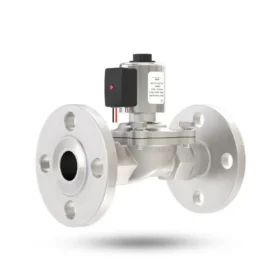
Semi Lift Diaphragm Type Solenoid Valve Flange End for Pressure 0 to 5KG/Cm2 Aira GSDF 1/2″ to 2″
 Pneumatics, Solenoid Valves, Valves
Semi Lift Diaphragm Type Solenoid Valve Flange End for Pressure 0 to 5KG/Cm2 Aira GSDF 1/2″ to 2″
This Solenoid valve works at gravitational pressure that is, 0kg pressure is required to operate this valve.
Brand : Aira
Model : GSDF
Body MOC : CF8
Diaphragm : Nitrile
Media : Air, Water, Oil and Gas
Pressure : 0 to 5KG/Cm2
Temeprature : Upto 85CFor more types of solenoid valves, click here.
SKU: 453c4426ef96
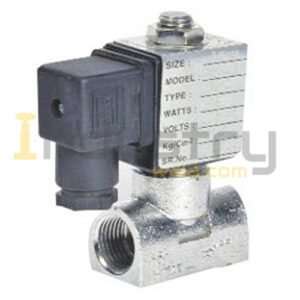
The Airmax Double Solenoid Poppet Valve 5/2 PPT-55 (3/4″ / 1″) delivered excellent performance in my pneumatic line. Switching is fast and precise, and the valve handles flow smoothly even under continuous use. The build feels strong and leak-free. Highly satisfied.
The Airmax Double Solenoid Poppet Valve PPT-55 impressed me with its build quality. Flow control is precise, switching is solid, and the valve feels robust. Ideal for systems requiring 5/2 directional control. Very happy with this purchase
I installed the Airmax PPT-55 double solenoid valve in my industrial air system, and it works flawlessly. The 5/2 configuration gives accurate direction control, and both 3/4″ and 1″ options are solid. Very reliable under pressure and provides consistent airflow.
Excellent value for money. The Airmax 5/2 Way Poppet Valve (3/4″ / 1″) performs consistently even under long hours of operation. The double-solenoid mechanism gives accurate and quick switching. Strong construction and easy to install. Recommended for industrial pneumatic systems.
This 5/2 Way Poppet Valve from Airmax is very sturdy and durable. The solenoids respond instantly, and the switching is smooth. I’m using the 1″ version — no leaks, no delay, and very stable performance. Good for heavy-duty applications.