

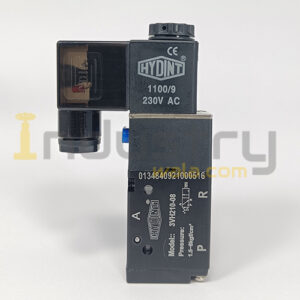
Airmax AD 20 Series 3/2 Way Single Pilot Operated Valve
Brand : Airmax
Body : Aluminium Anodized
Pressure : 1 to 10kg/cm2
Temperature : Upto 55 C
Media : Compressed Air
Price range: ₹915 through ₹1,849 Exclusive GST
Pilot valves use the differential pressure of the medium over the valve ports to open and close. Also known as servo-assisted solenoids, these valves provide high flow rates and can operate at higher pressure and temperature ranges, with lower power consumption. A servo-assisted, diaphragm solenoid valve with pilot control employs the use of a small chamber directly above the diaphragm to assist in the operation of the valve. Process fluid is allowed to enter the chamber through a small orifice in the inlet port, and in a normally closed valve, compresses against the diaphragm and forces is against the seat to maintain the closing seal.
Once current is applied to the pilot solenoid, the diaphragm is pulled upwards against the spring pressure, and the pilot fluid in the chamber is forced back through the orifice in the inlet port where it re-joins the main flow through the valve body.
The main areas of application for pilot-controlled diaphragm solenoid valves are liquid or gaseous media (such as compressed air, water and hydraulic oils) within closed circuits in which little or no differential pressure is present for opening and closing.
Benefits of Pilot solenoid valves
- Excellent for very large flow.
- Pressure assists valve operation.
- Needs minimum pressure differential.
- More economical for higher flow values
- Lower electrical power level.
Frequently Asked Questions
How does the Airmax AD 20 valve support reliable control when used with systems requiring precise cylinder mounting?
The Airmax AD 20 valve ensures accurate airflow switching, helping machines maintain smooth and consistent motion even when integrated into setups that include cylinder mounting.
Why is the AD 20 Series ideal for automation setups that involve cylinder mounting?
The AD 20 Series provides fast response and dependable sealing, making it suitable for automated equipment where stable cylinder mounting is essential for controlled cylinder movement.
Does the 3/2-way design improve performance in applications connected to cylinder mounting systems?
Yes, the 3/2-way design enhances directional control, improving the efficiency of pneumatic operations that depend on strong and responsive cylinder mounting.
How does single pilot operation ensure consistent performance in machines using cylinder mounting?
Single pilot operation offers smooth actuation and reduces air loss, which helps maintain reliable performance in industrial machines equipped with cylinder mounting.
4 reviews for Airmax AD 20 Series 3/2 Way Single Pilot Operated Valve
 Airmax AD 20 Series 3/2 Way Single Pilot Operated Valve
Related products
-
Pneumatics, Solenoid Valves, Valves
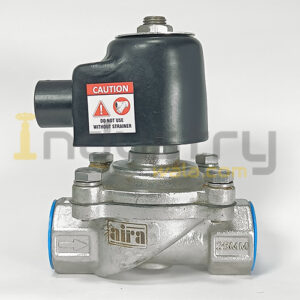
Diaphragm Solenoid Valves For High Temperature Upto 170°C Screwed End Normally Closed Aira GTD 1/2″ to 2″
 Pneumatics, Solenoid Valves, Valves
Diaphragm Solenoid Valves For High Temperature Upto 170°C Screwed End Normally Closed Aira GTD 1/2″ to 2″
This Solenoid valve works at gravitational pressure that is, 0kg pressure is required to operate this valve.
Brand : Aira
Model : GTD
Body MOC : CF8
Diaphragm : PTFE
Media : Steam
Pressure : 0 to 5KG/Cm2
Temeprature : Upto 170CFor more types of solenoid valves, click here.
SKU: 0ec166116eff
This Airmax Single Pilot Operated Valve is compact, sturdy, and extremely responsive. It controls air direction accurately with minimal effort. Installation was simple, and it has been running flawlessly in my workshop machines.
The Airmax AD 20 Series 3/2 Way Single Pilot Operated Valve works perfectly in my pneumatic system. The response time is fast, and the airflow control is very accurate. Strong build quality and no leakage at all. A reliable choice for industrial setups.
I am impressed with the performance of this 3/2 Way Single Pilot Operated Valve from Airmax. It operates smoothly, switches quickly, and handles continuous use without issues. Excellent durability and highly efficient for automation lines
The Airmax AD 20 3/2 Way Pilot Valve delivers consistent performance. The switching is smooth, and the pilot operation works precisely under varying pressure. Excellent build quality and ideal for small to medium pneumatic applications.