A compressed air filter or air line filter is used to filter impurities from atmospheric air, like dust, oil and moisture, to make compressed air viable for use.
Just like air dryers, they are a crucial part of the air treatment process to make sure your compressed air is clean and safe to use, and to increase your equipment’s life span.
Proper air preparation significantly increases the process and production reliability of machines. Particles, water and oils in compressed air reduce the service life and functionality of components and systems. They also impair productivity and energy efficiency. In this article, a variety of air filtration and air treatment products are outlined and discussed, along with ancillary equipment like drains.
Why Compressed Air Filtration is Necessary
One cubic foot of compressed air can contain millions of dirt particles, considerable amounts of water and oil — and even heavy metals like lead, cadmium and mercury. If they are not filtered out, trouble-free operation of the system components, like valves and cylinders, cannot be guaranteed in the long term. Poorly prepared compressed air can contaminate control valves, and cause seals to swell and wear prematurely. As a result, the right compressed air preparation is essential for reducing machine downtime, and for reducing maintenance and energy costs.
Filters are used to remove particles, condensate and oil. Coarse / particulate filters have a pore size of 5 to 40 microns. The air flows past a centrifugal separator and then through the filter element. The filter elements are often a sintered material, like polyethylene or bronze.
Fine and micro filters remove particles smaller than 1 micron, down to 0.01 micron. The air flows through the filter cartridges from the inside to the outside. Solid particles get stuck in the filter cartridge, clogging it up. Fluid particles, such as condensate or oil, coalesce or attach to larger droplets, which flow off and are caught in the filter bowl. It is important to cascade your filters to avoid prematurely clogging the filter element. For example, if 1-micron filtration is needed, it is recommended to use a 5-micron filter upstream so that the 1-micron filter does not become clogged with larger particles.
Pressure regulators reduce and control fluid pressure in compressed air systems. Regulators are also frequently referred to as PRVs (pressure reducing valves). Optimally, a pressure regulator maintains a constant output pressure regardless of variations in the input pressure and downstream flow requirements.
What is a Pneumatic Lubricator?
A lubricator for a pneumatic system provides lubrication to internal working parts of
pneumatic tools and components, including actuating cylinders, valves and motors.
The device injects a stream of oil into the airline, ensuring they perform at the optimum
level at all times.
FAQs – Airmax Standard Series Air Lubricator:
1. How does an air lubricator improve the performance of pneumatic tools and equipment?
An air lubricator ensures a controlled amount of oil is mixed into the airflow, reducing friction, preventing wear, and extending the life of pneumatic tools and actuators.
2. Is an air lubricator necessary for maintaining smooth operation in industrial pneumatic systems?
Yes, an air lubricator is essential for systems where continuous lubrication is required to maintain efficiency, reduce downtime, and protect internal components from damage.
3. Does an air lubricator help in reducing maintenance costs over time?
Absolutely. An air lubricator minimizes component wear and prevents premature failure, significantly reducing the overall maintenance and replacement costs.
4. Can an air lubricator be easily installed in existing FRL or standalone pneumatic setups?
Yes, an air lubricator is designed for quick integration into standard FRL assemblies or standalone lines, making installation simple while ensuring consistent lubrication performance.

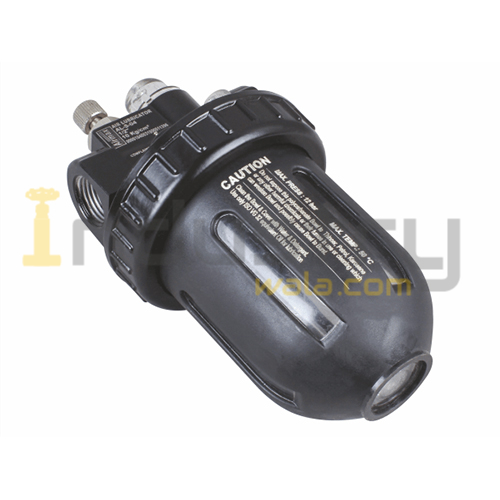
This Airmax air lubricator is perfect for industrial pneumatic lines. It offers precise oil metering and helps reduce wear on all tools. I’ve noticed a significant improvement in performance after installing it. Highly recommended.
The Airmax Standard Series air lubricator works perfectly in my pneumatic setup. It provides consistent lubrication and keeps all components running smoothly.
I installed this air lubricator in my workshop, and the performance is outstanding. Airmax has done a great job with the Standard Series—durable body, smooth oil flow, and reliable results.
The Standard Series air lubricator from Airmax is one of the best I’ve used. The build is robust, installation is simple, and the lubrication output is very consistent. Ideal for long-term use in heavy-duty applications.