
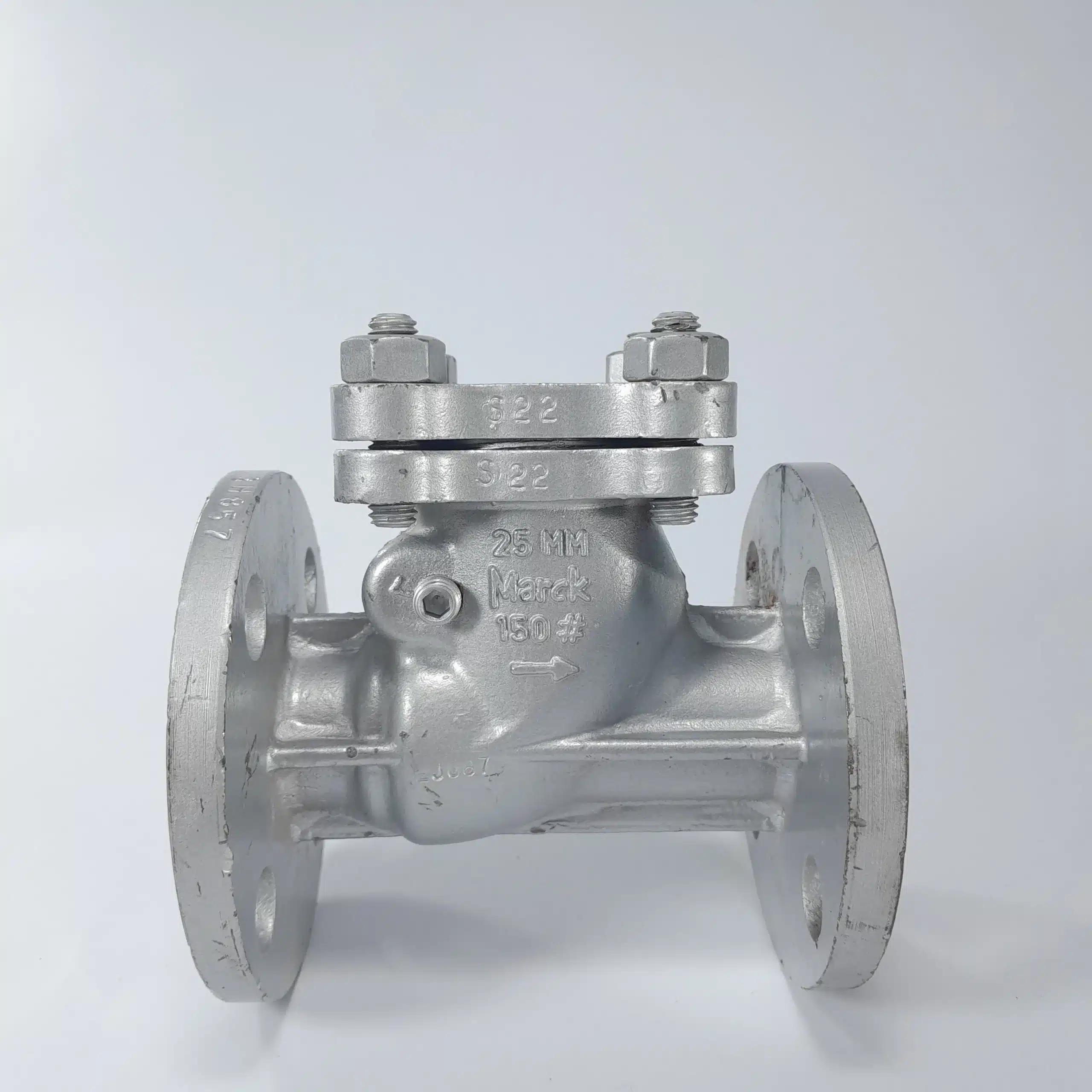
Best Industrial Cast Steel Check Valve Class 150 | NRV Leave a comment
In modern industrial piping systems, preventing backflow is critical for equipment protection, process efficiency, and operational safety. The Cast Steel Check Valve Class 150 has become the industry standard for reliable, high-performance backflow prevention across multiple sectors. This comprehensive guide explores everything you need to know about Industrial Check Valve selection, cast steel check valve specifications, pricing, and supplier selection to make informed purchasing decisions.
Understanding Cast Steel Check Valve Class 150
What is a Cast Steel NRV?
A Cast Steel Non Return Valve (NRV), also known as a check valve or one-way valve, automatically permits fluid flow in one direction while preventing reverse flow. The Cast Steel Check Valve Class 150 designation indicates:
- Material: ASTM A216 WCB cast carbon steel construction
- Pressure Rating: Class 150 (approximately 285 psi at ambient temperature)
- Standards Compliance: ASME B16.34, API 6D, and ISO 10434
- Temperature Range: -29°C to 425°C (-20°F to 800°F)
Why Choose Cast Steel for Check Valves?
When you buy cast steel check valve Class 150, you benefit from:
- Superior Strength: Cast steel offers excellent tensile strength (485 MPa minimum) and impact resistance, making it ideal for demanding applications.
- Temperature Versatility: Unlike bronze or ductile iron, cast steel maintains structural integrity across extreme temperature variations.
- Corrosion Resistance: Proper heat treatment and surface finishing provide adequate corrosion protection for most industrial fluids.
- Cost-Effectiveness: The Cast Steel NRV price offers optimal balance between performance and affordability compared to stainless steel alternatives.
- Longevity: With proper maintenance, cast steel check valves deliver 20-30 years of reliable service in typical industrial environments.
Cast Steel Check Valve Specifications: Technical Deep Dive
Critical Design Parameters
When evaluating cast steel check valve specifications, consider these essential factors:
Pressure-Temperature Ratings:
- Class 150: Up to 19.6 bar (285 psi) at 38°C (100°F)
- Derated to 16.5 bar (240 psi) at 260°C (500°F)
- Maximum working pressure varies with temperature per ASME B16.34
Size Range:
- Available from DN15 (½”) to DN600 (24″) and larger
- Standard flanged connections per ANSI/ASME B16.5
- Optional threaded, socket weld, or butt weld ends
Body Materials:
- ASTM A216 WCB (carbon steel – most common)
- ASTM A217 WC6 (1.25% Cr, 0.5% Mo for elevated temperatures)
- ASTM A352 LCB (low-temperature carbon steel)
Internal Components:
- Disc/Clapper: WCB, stainless steel, or hard-faced options
- Seat: Integral body seat or renewable stainless steel
- Hinge Pin: Stainless steel 410 or 304
- Gaskets: Spiral wound graphite or compressed fiber
End Connections:
- Flanged: ASME B16.5 raised face (RF) or ring type joint (RTJ)
- Threaded: ASME B1.20.1 NPT or BSP
- Welded: Socket weld or butt weld per ASME B16.11
Types of Industrial Check Valves
1. Swing Check Valve
The most common Industrial Check Valve design features a hinged disc that swings open with forward flow and closes with reverse flow or flow stoppage.
Advantages:
- Minimal pressure drop (0.2-2 psi)
- Suitable for low-velocity applications
- Available in horizontal or vertical configurations
- Excellent for large diameter pipes (DN150-DN600)
Best Applications: Water distribution, HVAC systems, power plants, chemical processing
2. Lift Check Valve
Similar to globe valves, lift check valves feature a guided disc that lifts vertically off the seat.
Advantages:
- Positive sealing characteristics
- Suitable for high-pressure applications
- Compact design for space-constrained installations
- Easy maintenance with top-entry bonnets
Best Applications: Boiler feedwater, high-pressure steam, pump discharge lines
3. Dual Plate Wafer Check Valve
Features two semi-circular plates that pivot on a central hinge.
Advantages:
- Lightweight and compact
- Lower installed cost
- Reduced water hammer
- Quick response time
Best Applications: Pump protection, HVAC, water treatment, fire protection systems
4. Tilting Disc Check Valve
Advanced design with a disc that tilts open at low flow rates.
Advantages:
- Minimal head loss
- Reduced slamming and water hammer
- Suitable for pulsating flows
- Lower maintenance requirements
Best Applications: Pumping stations, offshore platforms, slurry services
Finding the Right Class 150 Check Valve Supplier
Supplier Selection Criteria
Choosing a reputable Class 150 check valve supplier ensures product quality and long-term support:
Manufacturing Credentials:
- ISO 9001:2015 quality management certification
- API 6D monogram license for critical applications
- ASME Section VIII authorization
- PED (Pressure Equipment Directive) compliance for European markets
- Material traceability per EN 10204 3.1 or 3.2
Technical Capabilities: When you order cast steel NRV, verify the supplier offers:
- In-house engineering and application support
- Hydrostatic and pneumatic testing facilities
- Non-destructive testing (NDT): radiography, ultrasonic, magnetic particle
- Seat leakage testing per API 598 or ISO 5208
- Custom fabrication capabilities
Quality Assurance: A trusted industrial check valve distributor should provide:
- Complete material test reports (MTR)
- Pressure test certificates
- Dimensional inspection reports
- Coating thickness verification (if applicable)
- Traceability documentation
Authorized vs. Aftermarket Suppliers
When you buycast steel check valve, understand the difference:
Authorized Distributors:
- Genuine OEM products with full warranty
- Factory-trained technical support
- Access to original spare parts
- Direct manufacturer backing
- Typically 10-15% premium pricing
Aftermarket Suppliers:
- Competitive Cast Steel NRV price points
- Wider inventory availability
- Faster delivery for standard sizes
- Quality varies significantly
- Limited technical support
Recommendation: For critical applications (boiler feedwater, high-pressure steam, offshore), always buy industrial check valve Class 150 from authorized sources. For non-critical general service, qualified aftermarket suppliers offer excellent value.
Cast Steel NRV Price: Market Analysis 2026
Pricing Factors
The Cast Steel NRV price depends on multiple variables:
- Valve Size: Larger diameters require more material and machining
- Type: Swing check (most economical) vs. lift or tilting disc designs
- Trim Materials: Standard WCB vs. stainless steel or hard-faced components
- End Connections: Flanged (higher cost) vs. threaded or welded
- Certifications: Special testing or material certificates add 5-15%
- Quantity: Bulk orders typically receive 10-25% discounts
- Supplier Location: Imported valves may include duties and freight
Price Range Guide (USD, 2026)
Swing Check Valves – Class 150, WCB, Flanged RF:
- DN50 (2″): $85-$150
- DN80 (3″): $145-$250
- DN100 (4″): $220-$380
- DN150 (6″): $450-$750
- DN200 (8″): $750-$1,200
- DN250 (10″): $1,100-$1,850
- DN300 (12″): $1,650-$2,800
- DN400 (16″): $3,200-$5,500
Lift Check Valves (typically 15-25% higher than swing type)
Dual Plate Wafer Check Valves (typically 30-40% lower than swing type)
When you get cast steel check valve quote, request itemized pricing including:
- Valve body and trim
- Gaskets and fasteners
- Testing and certification fees
- Protective coating (if required)
- Packaging and shipping
How to Buy Cast Steel Check Valve Class 150: Step-by-Step
Step 1: Application Analysis
Before you shop cast steel check valves, gather:
- Fluid type, temperature, and pressure
- Pipe size and schedule
- Flow rate and velocity
- Vertical or horizontal installation
- Water hammer concerns
- Space limitations
- Code requirements (ASME, API, etc.)
Step 2: Specification Development
Work with your Class 150 check valve supplier to define:
- Valve type (swing, lift, dual plate, tilting disc)
- Body and trim materials
- End connection requirements
- Pressure testing standards
- Special coatings or linings
- Documentation requirements
Step 3: Supplier Qualification
When searching for “cast steel NRV for sale,” evaluate:
- Supplier reputation and industry experience (minimum 5-10 years)
- Manufacturing facility capabilities
- Quality control procedures
- Previous customer references
- Stock availability and lead times
- Warranty terms (typically 12-18 months)
Step 4: Purchase and Inspection
To successfully acquire cast steel check valve Class 150:
- Review shop drawings before manufacturing
- Request witness testing for critical applications
- Verify dimensional compliance
- Check material certifications
- Inspect coating quality and finish
- Confirm nameplate data accuracy
Installation Best Practices
Proper installation maximizes performance when you invest in Class 150 NRV:
Swing Check Valves:
- Install with flow arrow matching system flow direction
- Horizontal lines: mount with hinge pin horizontal
- Vertical lines: ensure upward flow only
- Provide minimum 5-10 pipe diameters upstream straight pipe
- Support valve weight independently from piping
Lift Check Valves:
- Can be installed horizontally or vertically (flow upward)
- Ensure bonnet is accessible for maintenance
- Verify sufficient clearance for disc travel
- Install pressure gauge upstream to monitor operation
General Guidelines:
- Clean pipe thoroughly before installation
- Use appropriate gasket material for service conditions
- Torque bolts to manufacturer specifications
- Perform hydrostatic test after installation
- Commission slowly to prevent water hammer
Maintenance and Troubleshooting
Preventive Maintenance Schedule
When you order industrial check valve, implement these practices:
Quarterly:
- External visual inspection
- Listen for unusual noises (chattering, slamming)
- Check for external leakage
- Verify proper installation orientation
Annually:
- Internal inspection of disc and seat
- Clean debris and scale buildup
- Check hinge pin wear
- Seat lapping if minor leakage detected
- Replace gaskets as needed
Every 3-5 Years:
- Complete overhaul
- Replace worn internal components
- Hydrostatic testing
- Update maintenance records
Common Issues and Solutions
Problem: Disc chattering or vibration Solution: Check for undersized valve, excessive turbulence, or partially closed discharge valve
Problem: Backflow leakage Solution: Inspect seat damage, foreign material, or worn disc; lap or replace components
Problem: Excessive pressure drop Solution: Verify correct valve sizing; check for debris obstruction
Problem: Water hammer Solution: Install valve closer to pump; consider nylon bushing damper; upgrade to silent check valve design
Applications Across Industries
The Cast Steel Check Valve Class 150 serves critical functions in:
Oil & Gas: Pipeline protection, pump discharge, meter runs, tank farm operations
Power Generation: Boiler feedwater systems, condensate return, cooling water circuits
Chemical Processing: Reactor feed lines, transfer pumps, solvent recovery systems
Water & Wastewater: Pumping stations, treatment plants, distribution networks, irrigation systems
HVAC: Chilled water systems, hot water heating, boiler installations
Marine: Ballast systems, bilge pumps, fuel transfer, cooling water
Food & Beverage: CIP systems, product transfer, sanitary processing lines (with special finishes)
Conclusion
The Cast Steel Check Valve Class 150 remains the workhorse of industrial fluid control systems in 2026, offering proven reliability, cost-effectiveness, and versatile performance. Understanding cast steel check valve specifications, pricing factors, and supplier selection criteria empowers you to make informed decisions that optimize system performance and lifecycle costs.
Whether you’re purchasing cast steel Non Return Valves for new construction or replacing aging equipment, partnering with an experienced Class 150 check valve supplier ensures proper sizing, material selection, and technical support from specification through commissioning.
Ready to buy cast steel check valve Class 150 for your facility? Contact certified industrial check valve distributors today for detailed specifications, competitive quotes, and expert application assistance tailored to your specific requirements.
